
100 Days
For an early learner, the number 100 is often synonymous with infinity. It represents the biggest number imaginable—a quantity so large it feels almost magical. Celebrating the 100th day of school is important
 because it turns this abstract, magical concept into a concrete reality. It acts as a major developmental bridge in their mathematical understanding, while also serving as a vital social-emotional milestone.
We celebrate the 100th day of school because it:
Builds Number Sense To an adult, 100 is just a number. To an early learner, it is a difficult concept to visualize. By physically gathering
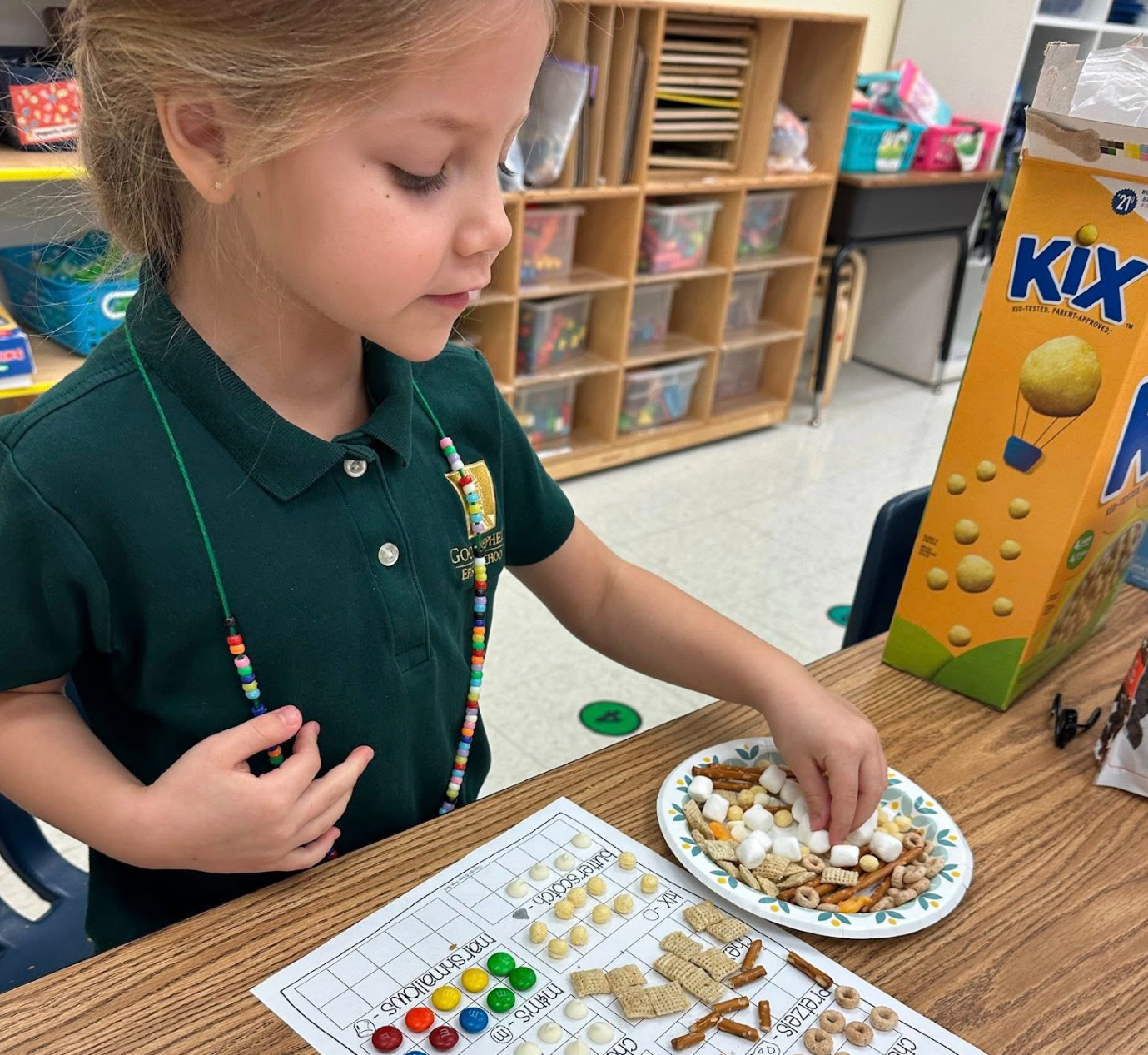
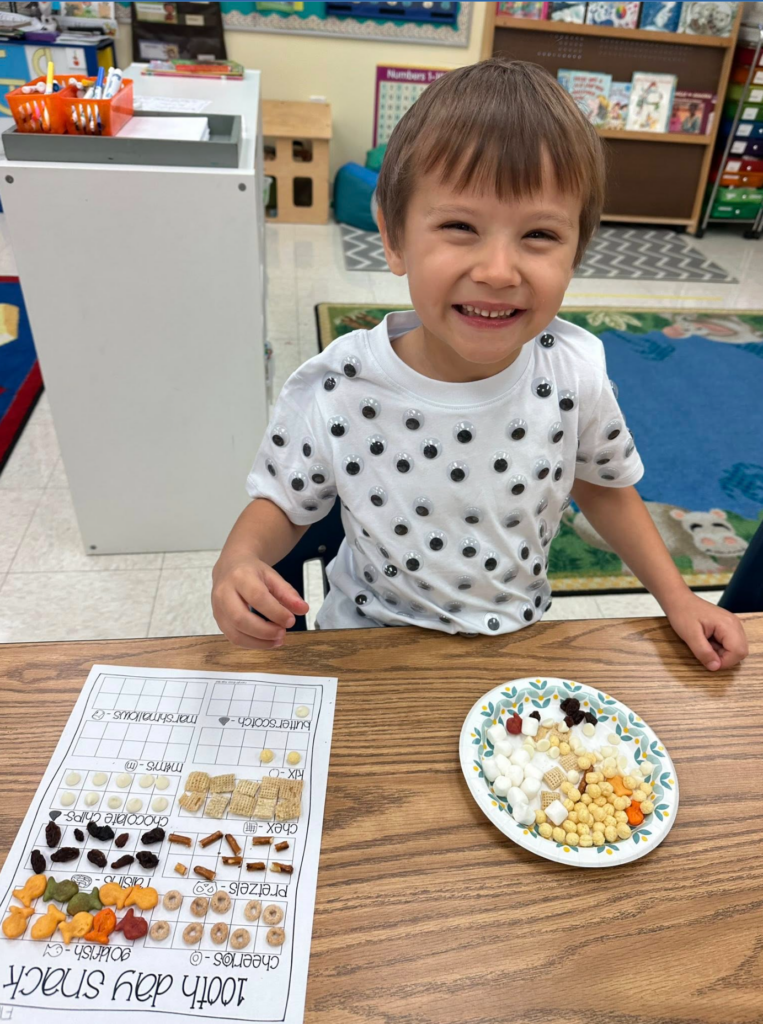
100 items (like counting 100 goldfish or gluing 100 pom-poms), they physically see and feel the quantity. This reinforces the concept that big numbers are made of smaller groups (ten groups of ten). This is the foundation of our base-10 number system and introduces the skill of skip counting by 10s.
Helps Develop Fine Motor Skills Most of the activities enjoyed today were deceptively academic. Sorting 100 items (by color, size, or shape) requires cognitive executive function. Threading 100 fruit loops onto a necklace or sticking 100 stickers onto a crown refines the pincer grasp and hand-eye coordination needed for writing.
Understanding the Passage of Time Our little ones live primarily in the present moment. If the class has been adding a straw or a sticker to a chart every day since
September, the 100th day is the celebration. It proves that small, daily actions add up to a large result over time.
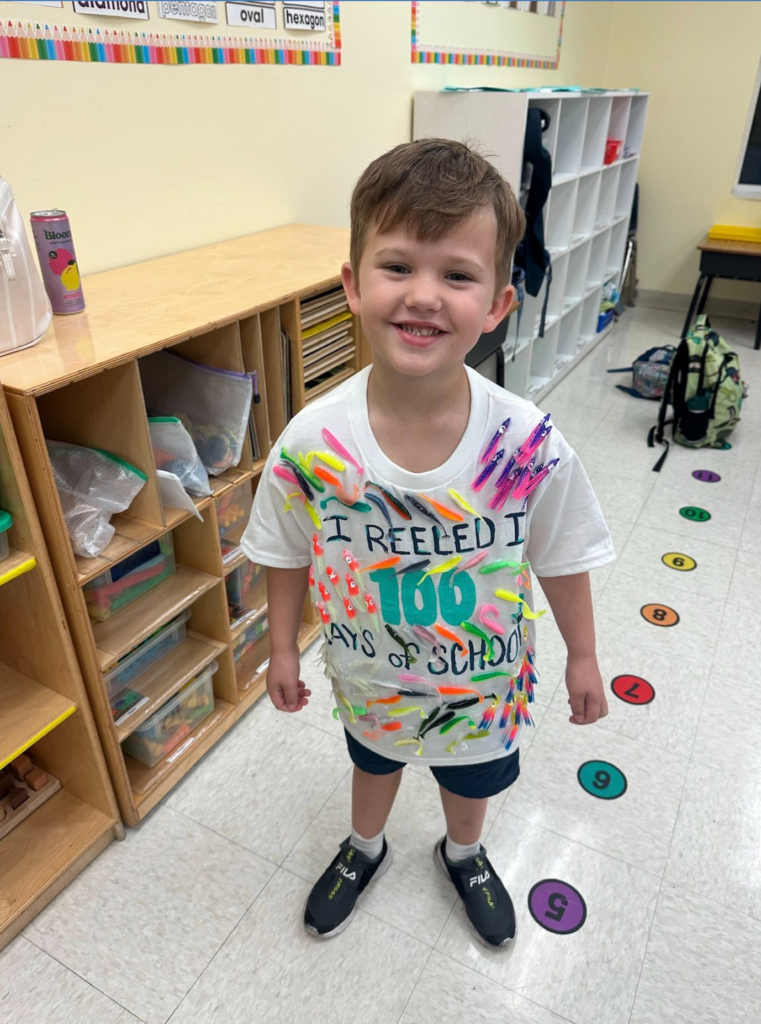
Boosts Confidence and Stamina We are 100 Days Smarter today! This celebration reframes this day of the year as an achievement. It emphasizes that they have successfully navigated separation from parents, learned new routines, and made friends for 100 days straight. It is
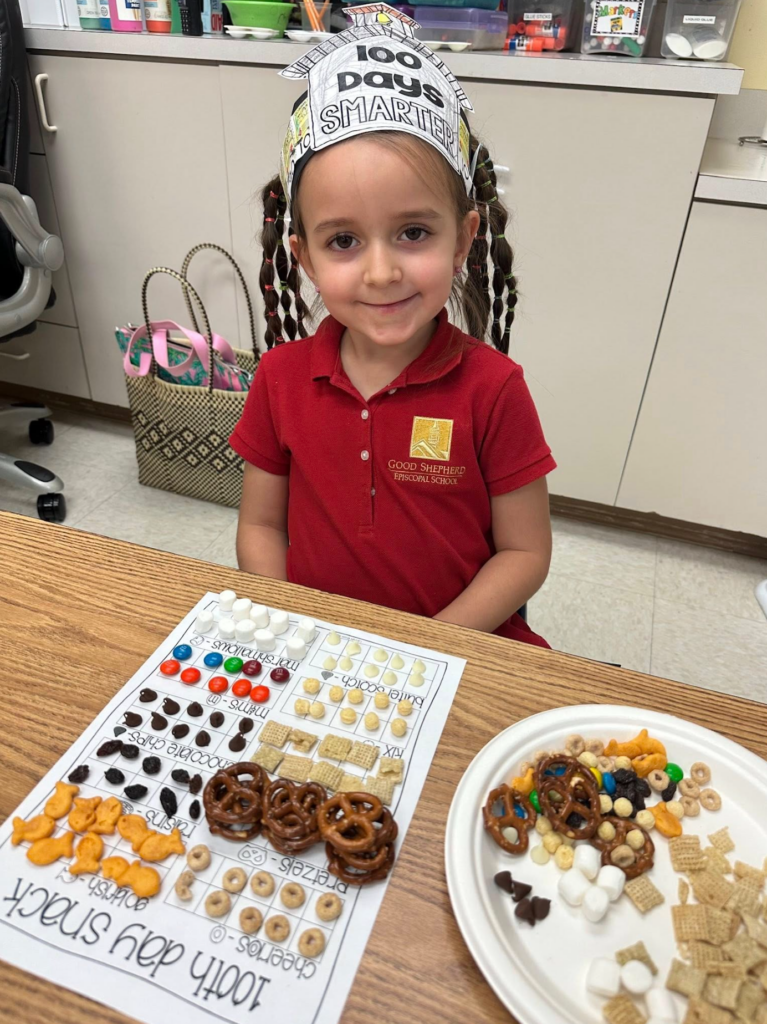 a collective victory when the class achieves 100 together, which builds classroom community and belonging.
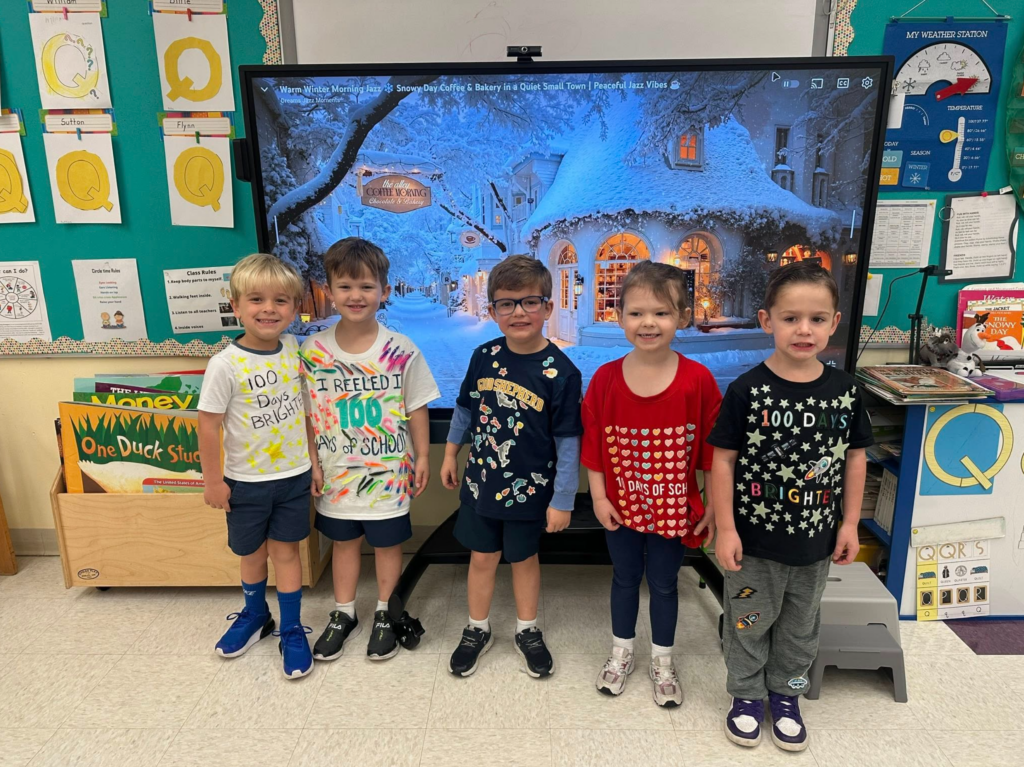
Encourages Imaginative Play We had quite a few 100 year olds on campus today! While cute, this also encourages empathy and imagination. It requires the child to project themselves into a different time and physical state.